Of all the questions I receive from people just beginning their smart home journey, the most common is, “What is the absolute easiest and cheapest way to get started?” My answer is almost always the same: start with a good, hub-less smart plug. This small, unassuming device is the gateway to home automation for millions of people, and for good reason. It requires no complex wiring, no extra hardware, and no major investment. You simply plug it in, and suddenly, your “dumb” lamp, fan, or coffee maker has a brain.
But the very simplicity that makes smart plugs so appealing has also flooded the market with a dizzying array of options, many from unknown brands with questionable quality and safety standards. As a professional, my goal is to help you navigate this landscape to find a product that is not only affordable and easy to use but also safe and reliable for the long haul. After extensive testing in my own home and for dozens of client installations, I’ve identified the best smart plugs that give you all the benefits of automation with none of the hassle of a hub.
How Hub-Less Smart Plugs Work: The Power of Wi-Fi
Before we look at specific brands, it’s important to understand the technology at play. Smart plugs that work “without a hub” almost universally connect to your home network using standard Wi-Fi (2.4GHz). This is their greatest strength and their main consideration.
- The Strength: It’s incredibly simple. You don’t need to buy a separate “bridge” or “hub” device. The plug talks directly to your Wi-Fi router, which then connects it to the internet so you can control it from your phone or with a voice assistant like Alexa or Google Assistant.
- The Consideration: The plug’s performance is tied to the quality of your Wi-Fi. If you have a weak signal in a particular room, the plug may struggle to stay online. However, for most modern homes, this is not an issue, especially when using a quality product.
This hub-less model is perfect for beginners who want to start small and add devices one at a time.
My Top Recommendations for Hub-Less Smart Plugs (As of 2025)
Reliability, app quality, and safety are my primary metrics. After countless installations, three brands consistently stand out from the pack for delivering a superior experience in the hub-less category.
1. Kasa Smart (by TP-Link): The Reliable All-Rounder
TP-Link has been a leader in home networking for decades, and that expertise shows in their Kasa products. Their smart plugs are my top recommendation for users who value stability and options.
- Why I Recommend It: Kasa plugs are renowned for their rock-solid Wi-Fi connectivity and their intuitive, feature-rich app. They are simple to set up and they stay online dependably.
- Must-Buy Model – The KP125M: While their basic plugs are excellent, I specifically recommend the Kasa Smart Wi-Fi Plug Slim with Energy Monitoring (KP125M). For a few dollars more, this plug adds the ability to see exactly how much power the connected device is using. It’s fantastic for identifying “energy vampire” electronics or just satisfying your curiosity about how much that old space heater costs to run.
- Ecosystem: The Kasa app is a mature platform that allows for easy scheduling, timers, and a great “Away Mode” that randomizes your lights to simulate presence. Many of their newer plugs also support `Matter` for even easier integration.
2. Wyze Plug: The Best Pure Value
Wyze has earned a massive following by offering feature-packed devices at incredibly low prices, and their smart plug is a prime example.
- Why I Recommend It: If you’re looking for the most bang for your buck, it’s hard to beat the Wyze Plug, which is often sold in multi-packs for a very low cost per unit. It’s a no-frills workhorse that gets the job done reliably.
- Performance: The plug is compact, responsive, and integrates seamlessly into the broader Wyze ecosystem of cameras and sensors. The app is clean and simple, making scheduling a breeze.
- The Trade-Off: Typically, the standard Wyze Plug does not include energy monitoring. You are trading that advanced feature for a lower price point. For users who simply want to add smart on/off control to a lamp or fan, this is an excellent and highly economical choice.
3. Cync (by GE): The Easy-Setup Champion
Coming from a legacy brand like GE, Cync smart plugs bring a high level of trust, build quality, and a focus on dead-simple setup.
- Why I Recommend It: Cync has perfected the user-friendly setup process. The Cync app walks you through every step, making it arguably the easiest plug for a true tech novice to get up and running.
- Reliability and Safety: Backed by GE, you can be confident in the plug’s safety certifications and build quality. In my experience, they are very reliable and respond instantly to both app and voice commands.
- `Matter` Support: GE has been aggressive in adopting the new `Matter` standard on their new plugs, which means they can be set up directly in Apple Home, Google Home, or Alexa without even needing to use the Cync app for anything other than potential firmware updates. This makes them incredibly flexible for the future.
Making a “Dumb” Apartment Smart for Under $100
A client who had just moved into his first apartment wanted to add some convenient “smart” touches but had a very limited budget and didn’t want any complex hubs or wiring. His goal was to solve a few specific daily annoyances.
The Plan: We mapped out his pain points and deployed a small army of smart plugs.
- The Problem: A living room lamp was plugged in behind a heavy couch, making it difficult to reach.
The Solution: A single Wyze Plug. Now he could turn it on and off with his voice via his Google Nest Mini. - The Problem: He wanted his fan to turn on automatically at night but not run all night long.
The Solution: A Kasa Smart Plug. We used the Kasa app to set a simple schedule: “Turn on at 10 PM, turn off at 2 AM.” - The Problem: He wanted to wake up to the smell of fresh coffee.
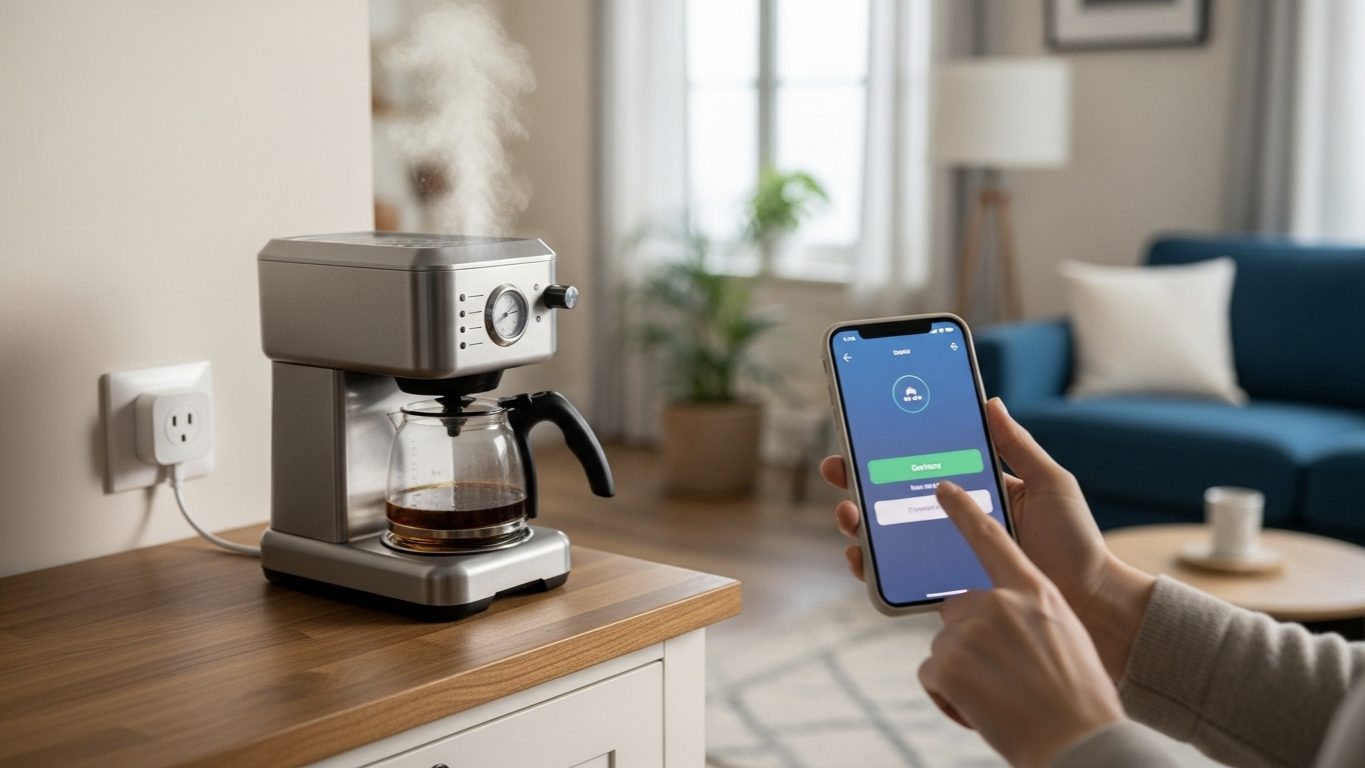
The Solution: Another Kasa Plug on his simple drip coffee maker. He prepares it the night before, and a schedule turns the machine on 10 minutes before his alarm.
For less than the cost of a fancy dinner, we used four smart plugs to add significant convenience and a touch of automation to his daily routine. It perfectly illustrates how these simple, hub-less devices are powerful problem-solvers.
My Expert Buying Guide: How to Avoid Dangerous Junk
When you search for smart plugs online, you’ll be met with dozens of generic, no-name brands at suspiciously low prices. As a professional, I urge you to avoid them. Here is what you must look for to ensure you’re buying a safe, reliable product.
1. Safety Certification: The Non-Negotiable Rule
This is the most important factor. Only purchase plugs that have a visible UL (Underwriters Laboratories) or ETL (Intertek) certification mark. This means the product has been rigorously tested by an accredited third-party lab to meet North American electrical safety standards. An uncertified plug that handles 120V of electricity is a serious fire risk. Reputable brands like Kasa, Wyze, and Cync all carry these certifications.
2. Compact Form Factor
Look at the physical size of the plug. The best designs are rectangular or round and compact enough that they do not block the second outlet when you plug them in. A poorly designed, bulky plug effectively makes you lose an outlet, which is incredibly frustrating.
3. Energy Monitoring (Is It Worth It for You?)
As mentioned with the Kasa KP125M, some plugs can track the electricity usage of the connected device. Is this feature worth the extra cost?
- Yes, if: You want to identify which appliances are costing you the most money or if you’re an energy-conscious data enthusiast.
- No, if: You are simply controlling a low-power device like an LED lamp and your main goal is on/off convenience.
4. `Matter` Support: The Future-Proofing Feature
If you see a `Matter` logo on the box of a new Wi-Fi plug, it’s a huge plus. This new smart home standard allows devices to work across all major ecosystems (Apple Home, Alexa, Google Home, SmartThings) with a simplified setup process. Buying a `Matter`-certified plug today is a great way to ensure it will remain compatible and useful for many years to come.
Conclusion: The Perfect First Step into Your Smart Home
You do not need a complicated, expensive system to start automating your home. A hub-less, Wi-Fi smart plug is the perfect, low-risk, high-reward entry point. It allows you to immediately solve small problems and experience the convenience and magic of home automation.
By sticking with trusted, safety-certified brands like Kasa (TP-Link), Wyze, and Cync, you can be confident that you’re buying a reliable product that’s easy to set up and safe to use. Whether you want to schedule your holiday lights, control a hard-to-reach lamp, or find out which of your old gadgets is draining the most power, there is a perfect hub-less smart plug waiting to make your life just a little bit easier.