As a smart home consultant, one of the first conversations I have with nearly every new client is about smart lighting. And very often, that conversation is accompanied by a look of “sticker shock” when they see the price of premium systems like Philips Hue. It immediately leads to the most common question I get: “Can I get that cool smart lighting experience without spending hundreds of dollars?”
I am here to tell you that the answer is an emphatic “YES.” While premium systems have their place (a topic I’ve covered in other reviews), the world of budget-friendly smart lighting has become incredibly competitive and impressive over the last few years. You no longer have to choose between paying a fortune and settling for unreliable junk. The key is knowing where to look and what to look for.
My job isn’t just to recommend the most expensive gear; it’s to find the best *value* for my clients. That means maximum performance, reliability, and features for the minimum cost. After testing dozens of low-cost bulbs, I’ve identified the top contenders that deliver a fantastic experience for anyone on a budget. Let’s illuminate the path to affordable smart lighting.
Understanding the “Budget” Smart Bulb: The World of Wi-Fi
Before we dive into specific brands, it’s crucial to understand the technology that powers virtually all budget-friendly smart bulbs: your home’s Wi-Fi network. Unlike premium systems that use a dedicated hub and a separate network (like Zigbee or Z-Wave), these bulbs connect directly to your home’s Wi-Fi router, just like your phone or laptop.
This approach has clear pros and cons that you need to be aware of:
- The Main Advantage: No Hub Required. This is the biggest selling point. You can buy a single bulb, screw it in, connect it to your Wi-Fi via its app, and you’re done. The cost of entry is incredibly low because you don’t need to purchase an additional piece of hardware for them to work.
- The Main Consideration: It Depends on Your Wi-Fi. The performance of these bulbs is directly tied to the quality and strength of your home’s Wi-Fi network. If your router is old or the bulb is placed in a room with a weak signal, you will experience frustrating connection drops and lag. A great Wi-Fi bulb on a bad network will perform poorly, and it’s not the bulb’s fault.
Understanding this trade-off is key. For most homes, and for users who plan on installing under 15-20 bulbs, a direct Wi-Fi connection is perfectly fine. It also makes brand selection paramount, as some companies manage their Wi-Fi connections far better than others.
My Top Recommendations for Reliable, Budget-Friendly Smart Bulbs
After countless hours of testing for reliability, app quality, and light output, I consistently recommend two brands to my budget-conscious clients. These companies have proven they can deliver a quality experience at an incredible price point.
1. Wyze Bulb Color: The Undisputed Value King
Wyze has built its entire brand on offering high-value tech at rock-bottom prices, and their smart bulbs are a shining example of this philosophy. For what you pay, the performance and features are almost unbelievable.
- Why I Recommend It: At around $10-$15 per bulb, the Wyze Bulb Color offers brightness (up to 1100 lumens) and color vibrancy that punches far above its weight class, competing with bulbs that cost twice as much.
- The Wyze App & Features: The app is clean, easy to use, and packed with useful features. You get standard scheduling and timers, but also premium-feeling extras like “Sun Match,” which automatically adjusts the bulb’s color temperature throughout the day to mimic natural sunlight, and “Sleep Routines” that help you wind down and wake up. Crucially, the app is a unified hub for all of Wyze’s other excellent budget products, like their cameras and plugs.
- The Downside: While their connection stability is excellent for a Wi-Fi bulb, it’s still Wi-Fi. Deep integrations for things like gaming sync (Razer Chroma) are not as robust or native as a premium system. But for 99% of users, this is a non-issue.
2. Kasa Smart (by TP-Link): The Networker’s Choice
TP-Link has been a massive name in home networking (routers, modems, extenders) for decades. This deep expertise in Wi-Fi technology gives their Kasa Smart brand an inherent level of trust and reliability that is hard to beat.
- Why I Recommend It: If your primary concern is rock-solid, stable connectivity, Kasa is arguably the top choice in the budget space. Their bulbs are workhorses. They connect easily, they stay connected, and they respond instantly to commands from the app or a voice assistant.
- Performance and Variety: The Kasa app is straightforward and dependable. While it may not have as many “fun” experimental features as Wyze, it nails the fundamentals perfectly. TP-Link also offers a huge variety of lighting products under the Kasa brand, from standard color bulbs to beautiful vintage-style filament smart bulbs and high-lumen bulbs for utility spaces.
- The Downside: While very good, the absolute peak brightness and color saturation on their standard bulbs can sometimes be a small step behind the very latest from Wyze. However, the trade-off is world-class Wi-Fi stability.
Smart Lighting for a Student’s First Apartment
I recently helped a university student set up his first apartment. He loved the idea of smart lighting for studying and for adding some personality to his living room, but his budget was extremely tight—he wanted to get it all done for under $50. A premium starter kit was completely out of the question.
The Goal: He needed one bright, color-tunable white light for his desk lamp and a color-changing light strip to mount behind his TV for movie nights and gaming.
The Budget-Friendly Solution:
- For the desk, we chose a single Wyze Bulb Color. This gave him the ability to set a bright, cool white for focused study sessions and a warmer, more relaxed tone for reading.
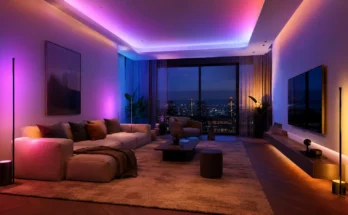
- For the TV, we went with a Kasa Smart Light Strip. It provided vibrant colors and was incredibly simple to set up.
The total cost was well within his budget. The best part? Although he had two different apps (Wyze and Kasa), he linked both to his Amazon Echo Dot. Now, he can control everything with his voice, setting scenes like “Alexa, set desk to focus mode” or “Alexa, set TV lights to blue.” This project was a perfect demonstration of how you can strategically mix and match top-tier budget brands to create a powerful, personalized smart home without a big investment.
My Expert Guide: How to Avoid Buying Bad Budget Bulbs
The low end of the market is flooded with duds. Here is my professional checklist to ensure you’re buying a quality product and not a future headache.
- Stick to Reputable Brands: I cannot stress this enough. Stick with known entities like Wyze, Kasa Smart (TP-Link), or Cync (by GE). Avoid the generic, no-name brands you see on Amazon or other marketplaces, even if they are a dollar or two cheaper. You are paying for app support, security updates, and a reliable cloud server.
- Look for Safety Certifications: This is a non-negotiable safety rule. Check the product description or the fine print on the bulb itself for a UL, ETL, or CSA logo. This means it has been tested by an independent laboratory to meet North American safety standards. An uncertified bulb is a potential fire hazard.
- Check Your Wi-Fi Signal First: Before you buy, take your phone to the exact spot where you plan to install the bulb. If you only have one or two bars of Wi-Fi, the bulb will struggle. Consider a simple Wi-Fi extender if needed. This one step can save you a world of frustration.
The Big Trade-Off: What Do You Give Up with Budget Bulbs?
To be clear, these bulbs are not 1-for-1 replacements for a system like Philips Hue. When you opt for a budget Wi-Fi solution, you are making a conscious trade-off. Here’s what you’re giving up:
- The Guarantee of a Dedicated Network: A hub-based system will always be more robust as you scale up to 20, 30, or 50+ lights.
- Deep Media Syncing: The advanced, native syncing of lights with Spotify music or Razer gaming peripherals is largely the domain of premium systems.
- A Truly Unified Platform: While you can control multiple brands through a voice assistant, you’ll still need to use each manufacturer’s app for firmware updates and specific settings.
Here’s my professional conclusion on the matter: With budget bulbs, you are trading the “set-it-and-forget-it” scalability and deep ecosystem of a premium system for a significantly lower cost of entry. For most people starting out, or for those who only need to automate a few rooms, this is a fantastic and completely worthwhile trade-off.
Conclusion: Your Smart, Affordable Lighting Plan
Creating a vibrant, convenient, and fun smart lighting setup is no longer a luxury reserved for those with deep pockets. Thanks to the fierce competition and technological improvements driven by brands like Wyze and Kasa, a truly great experience is more accessible than ever. By choosing a reputable brand, ensuring you have a decent Wi-Fi signal, and understanding the simple trade-offs, you can build a system that will bring you daily convenience and joy.
Don’t let a premium price tag deter you. Your journey into smart lighting can start today, and it can start affordably.