I’ve installed thousands of devices. But if you ask me which piece of tech has had the most profound, positive impact on my clients’ daily lives—and my own—the answer is surprisingly simple: automated smart blinds.
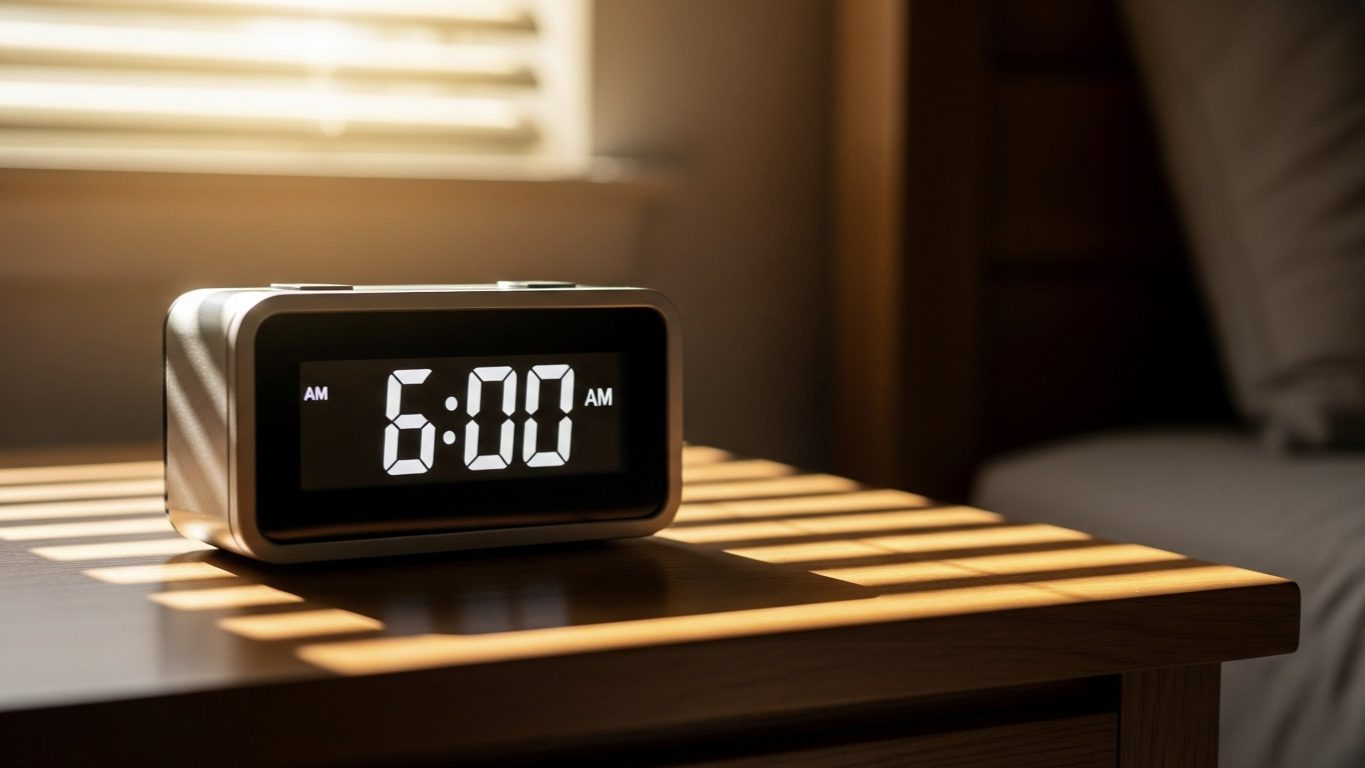
Forget the flashy color-changing lights or voice assistants that tell you jokes. The sheer magic of waking up gently, naturally, and on time, without the soul-shattering shriek of an alarm clock, is a daily luxury that fundamentally changes your relationship with mornings. It’s not just about convenience; it’s about aligning our modern lives with our ancient biology.
In this comprehensive guide, I’ll walk you through everything I’ve learned from countless installations and consultations. We’ll cover why this works, what to buy, how to set it up, and how to troubleshoot common issues. This is the advice I give my paying clients, designed to help you reclaim your mornings for good.
Why Ditch the Alarm Clock? The Science of Waking Up with Light
Before we dive into the technology, it’s crucial to understand the “why.” Our bodies are governed by a circadian rhythm, an internal 24-hour clock that regulates our sleep-wake cycle. For millennia, the primary cue for this clock has been the rising and setting of the sun.
When you’re jolted awake by a loud, artificial noise in a pitch-black room, you’re essentially short-circuiting this natural process. This can lead to:
- Sleep Inertia: That groggy, disoriented feeling that can last for minutes or even hours after waking up.
- Elevated Cortisol: An abrupt awakening triggers a spike in your primary stress hormone, cortisol. Doing this every single day can contribute to long-term stress and anxiety.
Conversely, a gradual increase in natural light signals to your brain that it’s time to gently transition from a sleep state to an awake state. It slowly suppresses melatonin (the sleep hormone) and allows cortisol to rise naturally and steadily, as it’s meant to. The result? You wake up feeling more refreshed, alert, and calm.
Smart blinds are the perfect tool to replicate this natural sunrise, even if your bedroom window doesn’t face east or your schedule requires you to wake up before the actual sun.
Choosing the Right Smart Blinds: My Professional Checklist
The market for smart blinds has exploded, which is both good and bad. More choice is great, but it can lead to paralysis. Here’s the checklist I use with my clients to narrow down the options.
1. Motor Power Source: Battery vs. Hardwired
- Battery-Powered: This is the most common and easiest to install. Modern options from brands like Lutron, Somfy, and Bali can last 1-3 years on a single charge. They are perfect for retrofitting existing windows without needing an electrician. My take: For 90% of homeowners, this is the best and most cost-effective option.
- Hardwired: This option requires running low-voltage wire from the window frame to a power source. It’s more work upfront but eliminates charging entirely. My take: Best for new construction or major renovations where walls are already open. It provides a true “set it and forget it” experience.
2. Fabric & Opacity: Blackout vs. Light-Filtering
- Blackout: Essential for bedrooms. These fabrics block nearly 100% of incoming light, ensuring you have a completely dark environment for sleeping, which is critical for melatonin production.
- Light-Filtering: These allow ambient light to pass through while still providing privacy. They are fantastic for living rooms, kitchens, and offices, but I don’t recommend them for the primary bedroom if your goal is a controlled wake-up experience.
3. Connectivity & Smart Home Integration
This is where the “smart” comes in. How your blinds talk to your other devices is critical.
-
- Wi-Fi: Connects directly to your home’s Wi-Fi network. Simple to set up, but can add congestion to a crowded network.
- Proprietary RF (like Lutron Clear Connect): Requires a dedicated hub/bridge. This is my preferred method for reliability. Systems like Lutron’s are rock-solid and don’t rely on your often-unstable Wi-Fi. The hub then connects to your smart home ecosystem (Alexa, Google Home, Apple HomeKit).
- Zigbee/Z-Wave: These are mesh network protocols that also require a hub (like SmartThings or Hubitat). They are robust and reliable but can be more complex for beginners.
–
- Matter: The new smart home standard. We are starting to see Matter-enabled blinds, which promise easier setup and interoperability between ecosystems. It’s the future, but the present selection is still growing.
Expert Pro-Tip: The Budget-Friendly Retrofit Solution.
If custom-fit smart blinds are outside your budget, don’t despair! Products like the SwitchBot Blind Tilt or Soma Smart Shades can motorize your existing blinds for a fraction of the cost. I’ve installed these for many clients in apartments or as a trial run. While they may not be as sleek or silent as integrated solutions, they are incredibly effective at achieving the same sunrise automation goal.
Transforming a Skeptic’s Morning Routine
I recently worked with a client, Mark, a software developer who described himself as a “chronic night owl and snooze-button addict.” He hated mornings, relying on three different alarms and a large coffee just to get to his desk. He was skeptical that “fancy blinds” could make a difference but was desperate for a change.
The Consultation: We identified his key pain points: sleep inertia and a feeling of being “rushed” and “anxious” from the moment he woke up. His bedroom window faced west, so he got zero direct morning sun.
The Solution: We chose a set of battery-powered Lutron Serena blackout roller shades. We paired them with a Lutron Smart Bridge Pro for ultimate reliability and integration with his existing Apple HomeKit setup.
The Automation: We didn’t just set them to open at 7:00 AM. We created a “Gentle Wake” scene in the Home app:
- 6:45 AM: Blinds open just 10%. This is imperceptible but allows a tiny amount of ambient light in, beginning the wake-up process subconsciously.
- 7:00 AM: Blinds slowly raise from 10% to 60% over a 15-minute period.
- 7:15 AM: Blinds are fully open. We also automated his Sonos speaker to begin playing a soft, instrumental playlist at a low volume at this time.
The Result: After one week, Mark emailed me with the subject line “You were right.” He said he was now consistently waking up around 7:10 AM, before his audio alarm, feeling calm and ready for the day. He had completely stopped using his phone alarm. For him, the investment wasn’t just in window coverings; it was in a better state of mind for the entire day.
The Automation Setup: A Practical Step-by-Step Guide
Once your blinds are installed, creating the sunrise automation is simple. I’ll use Amazon Alexa as an example, but the process is nearly identical for Google Home, Apple HomeKit, or SmartThings.
- Open the App: Navigate to the “Routines” section in your Alexa app.
- Create a New Routine: Tap the “+” icon.
- Set the Trigger (When this happens): Select “Schedule.” Choose “Sunrise” or a specific time (e.g., 6:45 AM). You can select which days of the week this runs.
- Add the First Action: Select “Smart Home,” find your blinds, and set them to open to 10%.
- Add a “Wait” Action: This is the key to a gradual opening. Add a “Wait” action for 15 minutes.
- Add the Second Action: Add another action for the same blinds, this time setting them to open to 100%.
- Save the Routine: Give it a name like “Morning Sunrise” and save it.
That’s it! You’ve just created a basic sunrise simulation. You can get more granular by adding more steps (e.g., 10% -> 40% -> 80% -> 100%) for an even smoother transition.
What If the Sun Isn’t Cooperating?
This is the most common question I get after the initial setup. What happens on those dark, gloomy, or rainy mornings? Or what if your schedule is totally unpredictable? Here are my go-to solutions.
The Challenge: Cloudy or Gloomy Days.
On a dark, rainy morning, even fully open blinds might not provide enough light to wake you effectively. The ambient light is simply too low.
The Expert Solution: The “Light and Shade” Combo.
The ultimate solution is to pair your smart blinds with smart lighting. I frequently install Philips Hue or similar color-capable smart bulbs for this purpose. We create a routine where, as the blinds are opening, the lights turn on to a very low brightness with a warm, reddish-orange hue. Over the same 15-30 minutes that the blinds open, the lights slowly brighten and shift their color temperature towards a cooler, blue-white daylight color. This combination is foolproof. It guarantees a perfect “sunrise” inside your room, regardless of the weather outside.
The Challenge: Shift Work or Irregular Schedules.
A fixed 7:00 AM schedule doesn’t work for everyone.
The Expert Solution: Voice-Activated & Conditional Routines.
Instead of a time-based schedule, we can create a routine that is triggered by voice. For example, the night before, a shift worker can simply say, “Alexa, run my wake-up routine at 4:30 AM tomorrow.” Alternatively, you can disable the scheduled routine on your days off and create a separate, identical routine that you trigger manually with your voice (“Alexa, start my sunrise”) when you’re ready to wake up on a weekend.
My Final Verdict: Are Smart Blinds Worth The Investment?
As a professional who lives and breathes this technology, my answer is an unequivocal yes. While the initial cost can be higher than traditional blinds, the return on investment is measured in something far more valuable than money: your well-being.
The ability to wake up naturally, reduce daily stress, and improve your sleep quality is a powerful benefit that pays dividends every single morning. It’s one of the few smart home upgrades that moves beyond simple convenience and actively contributes to a healthier lifestyle. In my experience, once a client experiences a true sunrise wake-up, they never, ever want to go back to a blaring alarm clock again.