As a Smart Home Integrator, I spend most of my time working with dedicated tech brands—Philips Hue, Lutron, Sonos, Google. But over the last few years, a surprising and formidable player has entered the smart home arena: IKEA. Known for affordable, flat-pack furniture, IKEA has quietly built out an entire ecosystem of smart products under their “Home smart” branding (formerly TRÅDFRI).
Clients ask me about IKEA’s smart products all the time. The appeal is obvious: the prices are incredibly competitive, and you can pick up a set of smart blinds or a smart speaker along with your meatballs and a new bookshelf. But the big question is, are they actually any good? Is this a serious smart home platform, or just a cheap gimmick?
I’ve purchased, tested, and installed nearly every product in IKEA’s smart home lineup for both personal projects and budget-conscious clients. The answer is a bit more nuanced than a simple “yes” or “no.” Let’s break down the major product categories and find out where IKEA shines and where it falls short.
The Foundation: The DIRIGERA Hub (Formerly TRÅDFRI Gateway)
Before we talk about the devices, we have to talk about the brain. IKEA’s smart devices use the Zigbee protocol, which means they require a hub to connect to your Wi-Fi network and talk to other ecosystems like Alexa, Google Home, or Apple HomeKit. The new DIRIGERA hub is a huge improvement over the old TRÅDFRI gateway.
The Good: It’s affordable (around $70), easy to set up with the new IKEA Home smart app, and, most importantly, it’s Matter-ready. This means IKEA is future-proofing its ecosystem to work with the new universal smart home standard.
The Bad: The app, while better, is still very basic compared to competitors like Philips Hue. The automation options are limited to simple timers and scenes. You won’t be building complex, multi-conditional rules here.
My Verdict: It’s a solid, reliable, no-frills hub that does its job. It’s the necessary price of entry into the IKEA ecosystem.
The Star of the Show: FYRTUR & TREDANSEN Smart Blinds
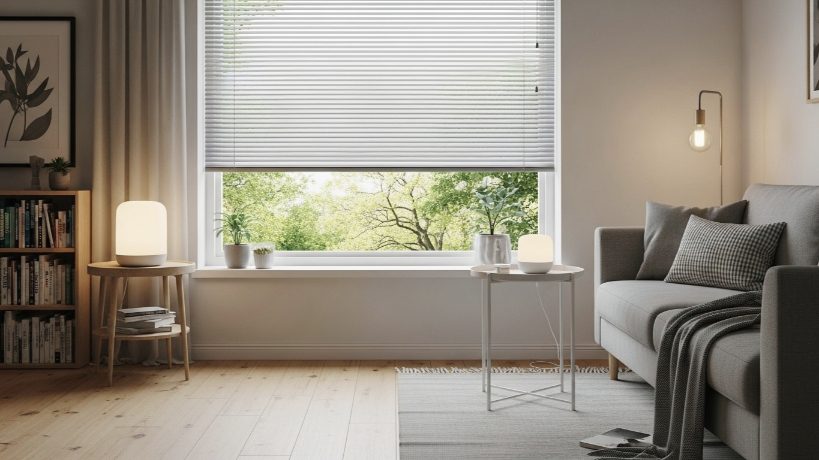
This is, without a doubt, IKEA’s killer product. For years, automated blinds were a luxury item costing $500-$1000+ per window. IKEA brought them to the masses.
The Good:
- The Price: Starting at around $150, these are by far the most affordable, fully integrated smart blinds on the market. It’s not even close.
- Simple, Clean Design: They have a minimalist, gray, blackout fabric design that fits well in most modern homes.
- Reliable Performance: They use a rechargeable battery pack that, in my testing, lasts for a solid 4-6 months per charge. The motor is quiet and the operation is smooth. They connect to the DIRIGERA hub and integrate perfectly with Alexa, Google Home, and Apple HomeKit for voice control and routines.
The Bad:
- Limited Sizes and Styles: This is the biggest trade-off. You can’t get them custom-made. You have to choose from a limited set of pre-cut widths. If your window doesn’t fit, you’re out of luck. The color is also gray or white, period.
My Verdict: If an IKEA size fits your window, this is the best value proposition in the entire smart home industry. I have them in my own bedroom, and the “Gentle Sunrise” routine where they open automatically every morning is a daily joy. For the price, they are unbeatable.
The Mainstay: TRÅDFRI Smart Lighting
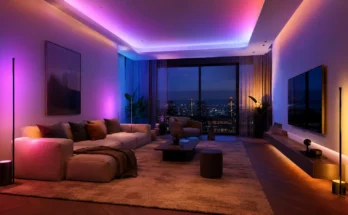
This is IKEA’s answer to Philips Hue. They offer a full range of smart bulbs, light panels, and LED drivers at very compelling prices.
The Good:
- Affordability: A standard TRÅDFRI white bulb can be had for under $10, and color bulbs are often half the price of their Hue counterparts.
- Compatibility: Here’s a pro secret: because they are Zigbee-based, you can often pair TRÅDFRI bulbs directly with a Philips Hue Bridge or other Zigbee hubs like SmartThings or Hubitat. This allows you to mix and match, using cheaper IKEA bulbs for less critical areas while still controlling them from the excellent Hue app.
- Unique Form Factors: IKEA offers some cool, integrated lighting panels (like FLOALT) that are unique in the market.
The Bad:
- Color Quality: The color reproduction on the color bulbs is noticeably inferior to Philips Hue. The greens and blues are less saturated, and the range isn’t as rich.
- The App Experience: As mentioned, the IKEA Home smart app is very basic. If you’re using only the IKEA hub, your scene and automation options are limited.
My Verdict: IKEA’s TRÅDFRI bulbs are fantastic “budget” options, especially if you plan to use them with a more powerful hub like Philips Hue. For simple white or warm-white lighting, they are a no-brainer. If you are a lighting enthusiast who wants the best possible color, it’s worth paying the premium for Hue.
The Surprise Hit: SYMFONISK Speakers (in partnership with Sonos)
This collaboration is a stroke of genius. IKEA partnered with Sonos, the undisputed leader in multi-room audio, to create a line of speakers that blend into your home’s decor.
The Good:
- It’s a Real Sonos Speaker: This is not a cheap imitation. The SYMFONISK speakers (like the bookshelf speaker or the picture frame speaker) are legitimate, full-fledged members of the Sonos ecosystem. They use the same world-class Sonos app, they sound fantastic for their price, and they group perfectly with any other Sonos speaker for multi-room audio.
- Innovative Design: The picture frame speaker can be hung on a wall with interchangeable art, and the bookshelf speaker can be tucked away discreetly. The lamp speaker combines a light and a speaker into one unit, saving space.
- Great Value: You are getting the Sonos experience and sound quality at a lower price point than Sonos’s own entry-level speakers.
The Bad:
- Not Technically “Smart”: Unlike an Echo or Nest speaker, they do not have a built-in voice assistant. You need a separate Alexa or Google Home device to control them with your voice (though the integration is seamless).
My Verdict: The SYMFONISK line is a massive success. If you’re looking to start or expand a Sonos system on a budget, it’s an incredible value. The picture frame speaker, in particular, is a favorite among my design-conscious clients.
Final Verdict: Is IKEA’s Smart Home System Good?
Yes, with an important asterisk. IKEA’s smart home products are good-to-excellent hardware let down by a very basic software experience.
My final recommendation is based on how you plan to use it:
- If you are a beginner on a tight budget and want a simple, self-contained system for a few lights and blinds, the IKEA ecosystem (with the DIRIGERA hub) is a fantastic and affordable starting point.
- If you are a smart home enthusiast, you should view IKEA’s products as a source of high-quality, affordable Zigbee hardware that you can incorporate into a more powerful, centralized hub system like Philips Hue, SmartThings, or Hubitat.
IKEA has successfully done for the smart home what it did for furniture: it has made good design and core functionality accessible to everyone. The smart blinds are a revolutionary value, the speakers are a brilliant partnership, and the lights are a perfect budget alternative. As long as you understand the limitations of its app, IKEA’s smart home gear is not just “good for the price”—it’s genuinely good.