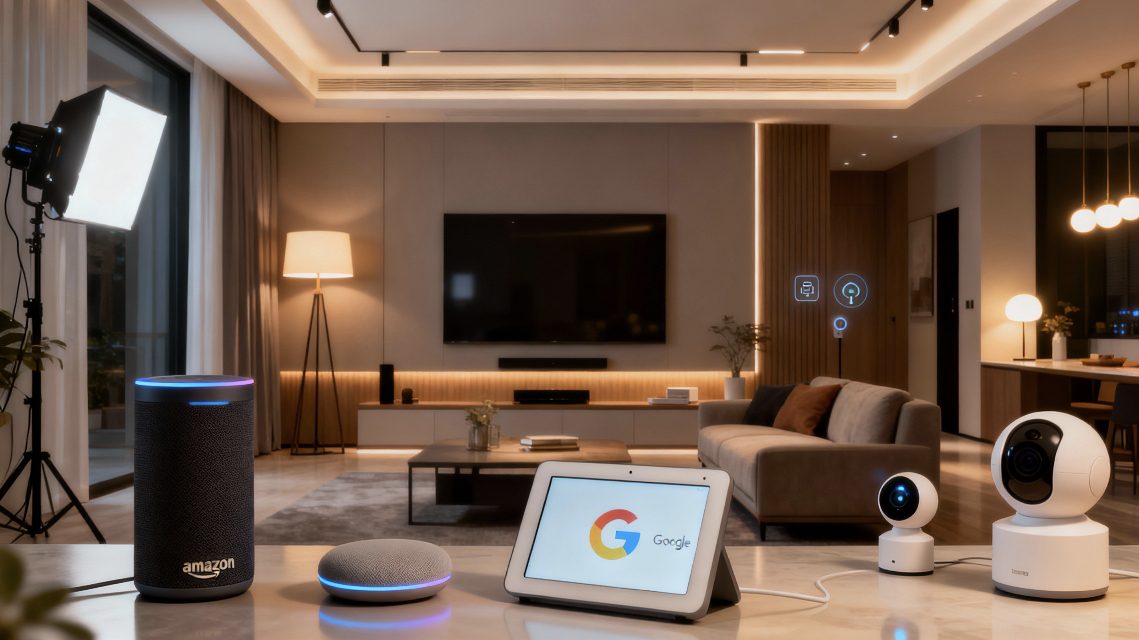
I love the excitement I see in new clients. They’ve just bought their first Amazon Echo or Google Nest Hub, and their minds are racing with possibilities. They go online or walk into a big-box store, and they’re like a kid in a candy shop. A cool-looking smart plug is on sale here, a color-changing light bulb from a different brand over there, and a fancy-looking smart camera from a third company in the bargain bin. They buy them all, bring them home, and that’s when the trouble begins.
They spend the next few hours downloading three different apps, creating three different user accounts, and trying to get three different systems to work together. Their smart home becomes a chaotic, disjointed collection of gadgets instead of a seamless, intelligent ecosystem.
As a Smart Home Integrator who has rescued countless clients from this exact scenario, I can tell you with absolute certainty that the #1 mistake beginners make is **buying devices without considering the ecosystem.** They buy the “what” without ever thinking about the “how.”
The “App Overload” and “Walled Garden” Problems
When you buy devices from multiple, disparate brands, you create two major sources of frustration for yourself.
1. The “App Overload” Problem
Your phone’s home screen quickly becomes a graveyard of single-purpose apps. You have the Wyze app for your camera, the Kasa app for your plugs, the Govee app for your light strip, and the Sengled app for your bulbs. To create a simple schedule for your lights, you have to do it in three different places. This isn’t “smart;” it’s just digital clutter. It completely defeats the purpose of a centralized, convenient smart home.
2. The “Walled Garden” Problem
This is the more insidious issue. Let’s say you want to create a simple automation: “When my Wyze motion sensor detects motion, turn on my Sengled light bulb.” You soon discover this is impossible to do directly. Wyze’s app can’t see or control a Sengled bulb, and vice versa. These brands live in their own “walled gardens.”
While you can sometimes bridge these gaps with a third-party service like IFTTT or by building complex routines in Alexa, it’s often clunky, slow, and unreliable. The best, fastest, and most reliable automations happen when your devices can speak to each other natively, within the same ecosystem.
The Professional’s Approach: Choose Your Ecosystem First
Before you buy your next smart device, I want you to stop and answer one question: “Which team am I on?”
A successful smart home is built around a central, unifying ecosystem. This provides a single app for control, a common language for devices to speak, and a powerful engine for reliable automation. You have two main paths to choose from.
Path 1: The “Big Three” Voice Assistants (The Beginner’s Choice)
This is the most accessible path. You commit to building your home primarily around one of these platforms:
- Amazon Alexa: The most popular and has the widest range of third-party device compatibility (“Works with Alexa”).
- Google Home / Assistant: A close second, with excellent AI and seamless integration with Android and other Google services.
- Apple HomeKit: Known for its strong focus on security and privacy, with a stricter certification process for devices.
How to do it right: Before you buy any device, look for the “Works with Alexa,” “Works with Google Home,” or “Works with Apple HomeKit” logo on the box. By sticking to devices that are certified for your chosen platform, you ensure that you can control and automate all of them from a single app (the Alexa, Google Home, or Apple Home app).
Path 2: The Dedicated Hub Ecosystem (The Power User’s Choice)
This is the next level. Instead of relying on a cloud-based voice assistant as your central controller, you use a physical hub in your home. These hubs use protocols like Zigbee and Z-Wave to create a super-fast and reliable local network for your devices.
- Philips Hue (for Lighting): If you’re serious about smart lighting, committing to the Hue ecosystem is a fantastic choice. All your lights connect to the Hue Bridge for rock-solid reliability and speed. You then connect the Hue Bridge to your voice assistant.
- Hubitat or Aeotec SmartThings (for Whole-Home Automation): These hubs are for enthusiasts who want maximum control and local processing. You would choose to buy Zigbee or Z-Wave devices (sensors, switches, locks) that connect directly to the hub, not your Wi-Fi.
A Personal Case Study: A client came to me with a box of assorted Wi-Fi smart plugs and sensors. He was trying to create a motion-activated lighting scheme for his hallway, but the 2-3 second delay from the cloud was driving him crazy. We swapped his Wi-Fi gear for a Zigbee-based system (a Hubitat hub, an Aqara motion sensor, and a Sengled bulb). Because all the devices spoke the same native language and were controlled locally by the hub, the response was instantaneous. He chose the right ecosystem for his specific goal (speed and reliability).
“But What If I Find a Cool Device Outside My Ecosystem?”
This is a realistic scenario. The beauty of choosing a major ecosystem like Alexa or Google is its role as a “universal remote.” You might decide to build your lighting around the Philips Hue ecosystem and your security around the Ring ecosystem. Both of these have excellent “Works with Alexa” skills.
This means you can still control both systems from the Alexa app and use them together in Alexa Routines. The key is that you made a conscious decision. You chose two strong, well-supported ecosystems that you know can be linked to your central “brain” (Alexa), rather than buying five random, unsupported brands.
My Final Verdict: Plan First, Purchase Second
The allure of a cheap, cool-looking smart gadget is strong. But I urge you to resist the impulse buy. Before you click “Add to Cart,” take 30 seconds to ask yourself:
- Does this device work with my chosen ecosystem (Alexa, Google, HomeKit)?
- Does this brand have a good reputation for support and reliability?
- Am I buying this because it solves a specific problem, or just because it’s on sale?
By shifting your mindset from “collecting devices” to “building a system,” you will save yourself countless hours of frustration. You’ll avoid app overload, create more powerful automations, and build a smart home that is a joy to use, not a chore to manage. This one simple shift in perspective is the true secret to smart home success.